End-of-life planning, kindly
Death binder: what it is and exactly what goes inside
A death binder (or “in case of death binder”) tells your family where everything is and what you wanted. Here's what goes in it — without the morbid overwhelm.
8 min read··By the InCaseBinder team
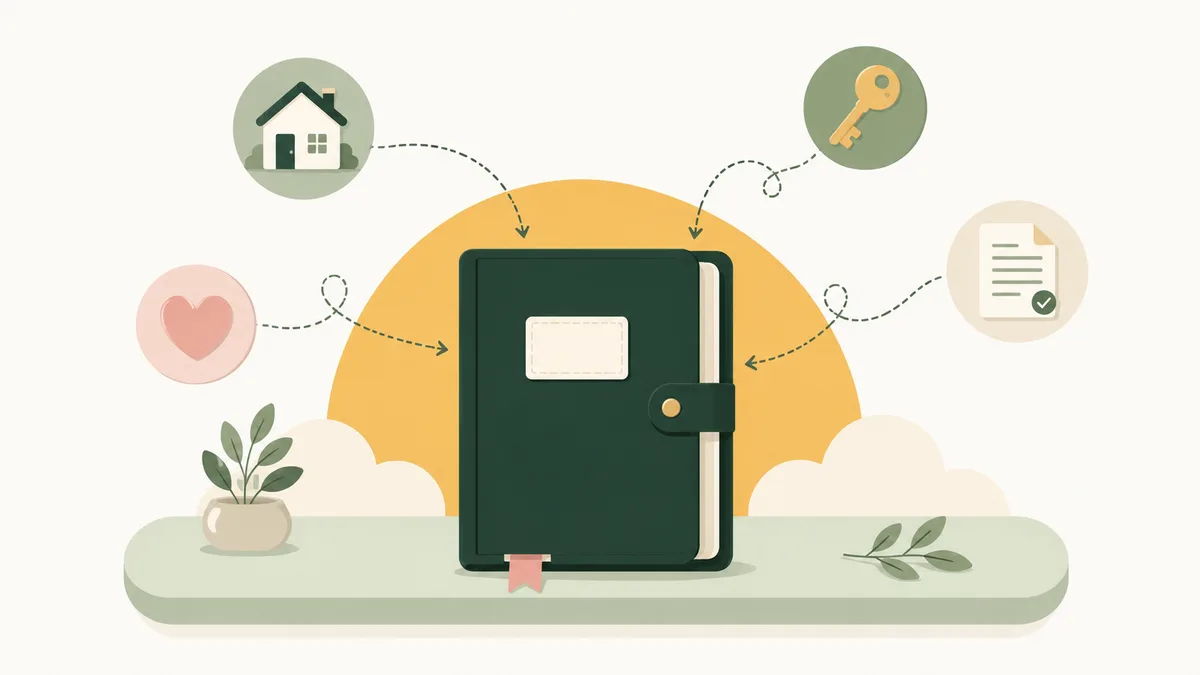
A death binder is a single organized collection of everything your family needs to know when you die: where the documents are, who to call, how the household runs, and what you wanted. It's also called an in-case-of-death binder, end-of-life binder, death preparation binder, or legacy binder. It is not a will — it's the map that leads your family to the will, and to the two hundred other things no will covers.
Here's everything that goes inside, what stays out, and how to build one without spending a month in paperwork — or in dread.
Why your family needs one (the uncomfortable math)
When someone dies, the family typically has to locate 20–40 separate pieces of information within weeks: death certificates aside, they need the will, insurance policies, account lists, property deeds, passwords, subscription logins, and the answers to a hundred small questions — which bills are on autopay? who services the furnace? what did she want read at the service?
Without a binder, that information is reconstructed by phone calls, locksmiths, court orders, and guesswork, while grieving. Life insurers alone hold billions in unclaimed benefits largely because beneficiaries never knew the policies existed. A death binder converts that month of detective work into an evening of reading.
Death binder vs. will: what each one does
| Will / estate documents | Death binder | |
|---|---|---|
| Legal force | Legally binding | None — purely practical |
| Controls | Who inherits, who executes, guardianship | Where everything is and how life keeps running |
| Opened | Days or weeks later, often with a lawyer | Within hours, by your family |
| Covers | The estate | The vet, the Wi-Fi, the autopay, the funeral playlist |
You need both. If you don't have a will yet, the binder is still worth making today — and it has a section that will gently nag you about the will.
Death binder checklist: what goes inside (the 10 sections)
- Who to call first. Two to four steady people, plus your attorney, insurance agent, and accountant. This page gets used in the first hour.
- Household basics. Legal names, dates of birth, and care notes for kids, dependents, and pets — including who's agreed to take the dog.
- Medical information. Conditions, critical medications, doctors — this matters before death (incapacity) as much as after.
- Work and benefits. Employer, HR contact, and crucially: group life insurance, 401(k), pensions, stock. The money your family doesn't know to ask about.
- Insurance policies. Life, home, auto, umbrella — company names and where each policy physically lives.
- Money and debts. Where you bank and invest, what you owe, which bills are on autopay from which account.
- Home and property. Deed or lease location, shut-off valves, vehicle titles, spare keys, and the tradespeople you trust.
- Digital life. Password manager access plan, phone passcode escrow, the email account everything recovers through, photo storage, subscriptions to cancel.
- Document locations. Where the originals are — passports, birth certificates, Social Security cards, marriage certificate, will, tax returns — and how to open the safe.
- Wishes and letters. Funeral preferences (burial or cremation, the song, the tone), and a letter in your own words. Families consistently say this is the page they keep.
For the deeper item-by-item breakdown of each section, see our complete emergency binder checklist — the contents overlap almost entirely, by design.
How to make a death binder (without the morbid overwhelm)
The reason most people don't have a death binder isn't laziness — it's that the task feels both enormous and grim. Three reframes that get it done:
- It's a kindness, not a death sentence. You're not planning to die; you're making sure the people you love never have to guess. Most binders get used for hospital stays and emergencies long before anything worse.
- Pointers over perfection. “Our accounts are at Chase and Fidelity; details in the safe” is a complete, useful answer. You can always add detail later.
- One evening, not one month. Set a timer, pour something nice, and go section by section. With an online death binder generator like InCaseBinder you fill it in, preview every page, and download a finished PDF — the median family finishes in about 90 minutes, faster than assembling the average IKEA dresser and considerably more important.
Where to keep it (and who to tell)
A fireproof document safe at home is the default answer; a bank safe-deposit box works if a second person is named on the box. Wherever it lives, tell at least two trusted people that the binder exists and where to find it. An unfindable binder is a diary.
Then put a recurring ten-minute appointment in your calendar each January: review, update, done. If a death in the family is what brought you here, our checklist on what to do when someone dies covers the first 48 hours, step by step.
Frequently asked questions
What is a death binder called?
It goes by many names: death binder, in-case-of-death binder, end-of-life binder, legacy binder, family emergency binder, or “when I die” file. They all describe the same thing — one organized place with the information and wishes your family needs when you're gone.
Is a death binder legally binding?
No. A death binder is a practical organizer, not a legal instrument. Your will, trust, power of attorney, and healthcare directives are the legally binding documents — the binder's job is to tell your family those documents exist, where they are, and everything else the lawyers don't cover: passwords locations, the vet's number, which bills are on autopay.
Should a death binder include passwords?
Not in plain text. Write where passwords live instead — for example, “1Password family account; the printed emergency kit is in the fireproof safe.” That keeps the binder useful to your family and useless to anyone who shouldn't have it.
How often should I update a death binder?
Once a year is enough for most families, plus after major life events: a move, a new child, a new job, a divorce, a big purchase. A ten-minute annual review keeps the binder trustworthy — an outdated binder can cause almost as much confusion as none at all.
What's the difference between a death binder and an emergency binder?
Scope. An emergency binder covers any scenario where you're unavailable — hospitalization, disaster, travel emergencies — while a death binder focuses on what happens after you die. In practice the best documents cover both, because the contents overlap almost entirely.
What do you put in a family binder?
A family binder (sometimes called a legacy binder or death preparation binder) holds ten things: who to call first, household basics, medical information, work benefits, insurance policies, money and debts, home and property, digital access, where your documents live, and your wishes. You don't write passwords or full account numbers — you point to where they are.
Is there a death binder template I can fill out online and download?
Yes. Rather than printing a blank death binder template, you can use an online generator like InCaseBinder: answer plain-English questions in your browser and download a finished, print-ready PDF — cover, a 'Start here' page, a one-page ICE sheet, and an encrypted backup. It's free to build and preview; you pay a one-time $39 only when you download, and your answers never leave your device.